They say its for our own benefit.........we sure hope so
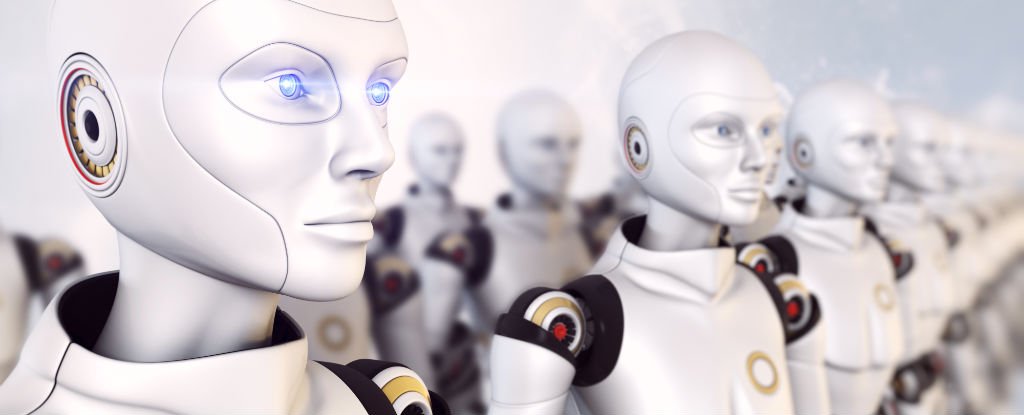
Initially, the headlines that software engineers are teaching robots to disobey their human masters does sound slightly troubling: should we really permit the artificial intelligence systems for the future to say no to us? But once you believe it through, you will see why such a feature might actually end up saving your life.
Think about a robot taking care of a vehicle production line: the majority of the time, it'd simply follow the instructions this has been given, but if an individual should get in harm's way, the equipment needs to be clever enough to prevent what it's doing. It needs to understand to override its default programming to place the human at less risk. It's this sort of functionality that a team from the Human-Robot Interaction Lab at Tufts University is trying to introduce.
The team's work is situated around the same 'Felicity conditions' that our human brains apply whenever we're asked to accomplish something. Under these conditions, we subconsiously tell you a number of considerations before we perform an activity: do I understand how to do this? Can I physically take action, and take action at this time? Am I obligated based on my social role to accomplish it? And finally, does it violate any normative principle to accomplish it?
If robots can be conditioned to ask these same questions, they'll manage to conform to unexpected circumstances because they occur.
Oahu is the last two questions which can be the main to the process. A robot needs to choose if the individual giving it instructions gets the authority to take action, and it takes to work out if the next actions are dangerous to itself or others. It's no easy concept to place into practice, as anyone who's ever watched 2001: A Space Odyssey will know (if you haven't, watch "Open the pod bay doors").
As you of their demo videos below shows, the computer scientists are trying out user-robot dialogues that allow for many give and take. That means the robot can provide reasons for why it won't do something (in this case it says it will fall off a desk when it walks forward) whilst the operator can offer extra reasons for why it will (the robot will soon be caught once it reaches the edge).
Researchers developing self-driving cars are also grappling with the same moral dilemma: if your driverless car is caught in an urgent situation situation where it threatens the lives of several people outside, does it intentionally crash itself right into a wall to kill its single occupant, or should it plough right into a crowd of pedestrians and potentially kill a lot more?
"Surveys suggested people generally agreed that the vehicle should minimise the general death toll, even when that meant killing the occupant - and probably the owner - of the automobile under consideration," Pete Dockrill reported for ScienceAlert this month.
A paper exploring most of these ideas has now been published online (and actually takes its name from A Space Odyssey). While it's true that teaching robots to disobey humans might be dangerous, it appears clear that having them do blindly whatever they're told could actually carry more of a risk.
"Humans reject directives for a wide range of reasons: from inability all how you can moral qualms," says the paper."What's still missing... is just a general, integrated set of architectural mechanisms in cognitive robotic architectures that have the ability to determine whether a directive ought to be accepted or rejected over the room of possible excuse categories (and generate the right rejection explanation)."
Watch an adorable robot fret sweetly about falling off a table below:
https://youtu.be/0tu4H1g3CtE

No comments:
Post a Comment