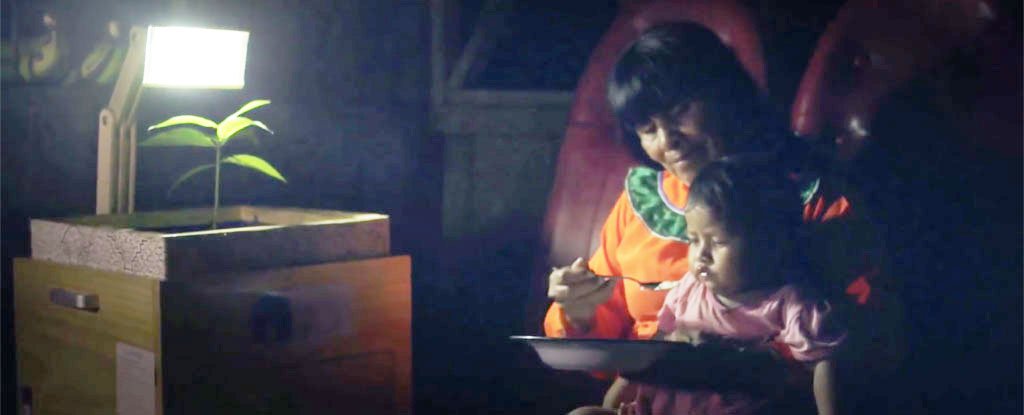
Luckily for the inhabitants of Nuevo Saposoa, a remote native community in Peru, they certainly were chosen to function as the recipients of experimental ‘plant lamps'(Plantalámpara in Spanish). The lamps run for 2 hours each day and provide bright LED lighting with low power consumption, which in this case is sourced from nutrients in the plant and soil itself.
We put the plant and soil into a wooden plant pot along with a previously established and properly protected irrigation system," said engineer Elmer Ramirez from Peru's University of Technology and Engineering (UTEC). "Then, within the pot we place the power generation system that individuals created which stores soil and electrodes capable of converting plant nutrients into electric energy."
In conjunction with advertising agency FCB, the researchers developed 10 trial plant lamps and donated them to Nuevo Saposoa's residents. The village, located in rainforest, is found in Ucayali, a region noted for having Peru's lowest rate of use of electricity.
As the extensive rainforest surroundings are section of what keeps the village separated from the country's electrical infrastructure, the vast levels of vegetation and flora in the area would also be an ideal resource to build more of the plant lamps, which operate on the free electrons of microorganisms released by the plants during their growth.
"We made proper usage of the Amazon region's own natural resources including the soil and plants, in harmony with the surroundings without any impact whatsoever on the forest," said Ramirez.
In addition to helping people cook food, perform work, and entertain themselves in the evenings when the sun has gone down, the fundamental benefit of Nuevo Saposoa's plant lamps will be in giving the village's children extra hours of your day for reading, writing, and school work. Education in Ucayali is not strong, with less than 30 percent of individuals attending secondary school and almost 15 percent of the population illiterate.
"While you can find shortages of a number of resources in Nuevo Saposoa, the lack of electric energy has a major effect on its social, educational and family development", said Jessica Ruas, an advertising director at UTEC. "We're positive this can lead to a better standard of living for community families because, by using the Plantalámpara, they will have use of renewable energy to supply light with their homes for use by the youngsters during their assignment work study hours … [and] contribute to the self-sustainability of the population."
You are able to check out the way the plant lamps had become (and how they operate) in the video below:

No comments:
Post a Comment